Search This Blog

Saturday, August 1, 2020

Reading/Watching Log #55

It was a month of fairy tales – it usually is – as well as revisiting books from my far-distant childhood and enjoying two theatre productions that have reaped vast amounts of effusive praise from those lucky enough to have the money and proximity required to see them (perhaps if there’s one thing the lockdown has been good for, it’s spurring drama companies to release more of their productions onto various streaming services).

There’s Emily Carroll’s most recent graphic novel (I love it), the most popular new genre film on Netflix (it’s okay), and the Oscar-winning Korean film that everyone’s been talking about (totally lives up to the hype). Stories are subverted in the best possible ways – you know, in ways that enhance the narrative and not just for their own sakes – and familiar stories are given exciting new updates, whether it’s feminist perspectives, diverse casting or darker insights into traditional tales.

Sunday, July 19, 2020

Xena Warrior Princess: King of Assassins, Warrior... Priestess... Tramp..., The Quill is Mightier

July is turning out to be a busy month for me, so there’s been little activity on this blog of late. That means it’s time for another three episodes of Xena Warrior Princess, which take a break from the emotional intensity of The Deliver and The Debt to make room for three filler comedy episodes.
The comedy episodes of this show can be pretty touch-and-go: these ones are fun without being particularly clever about it…

Thursday, July 2, 2020

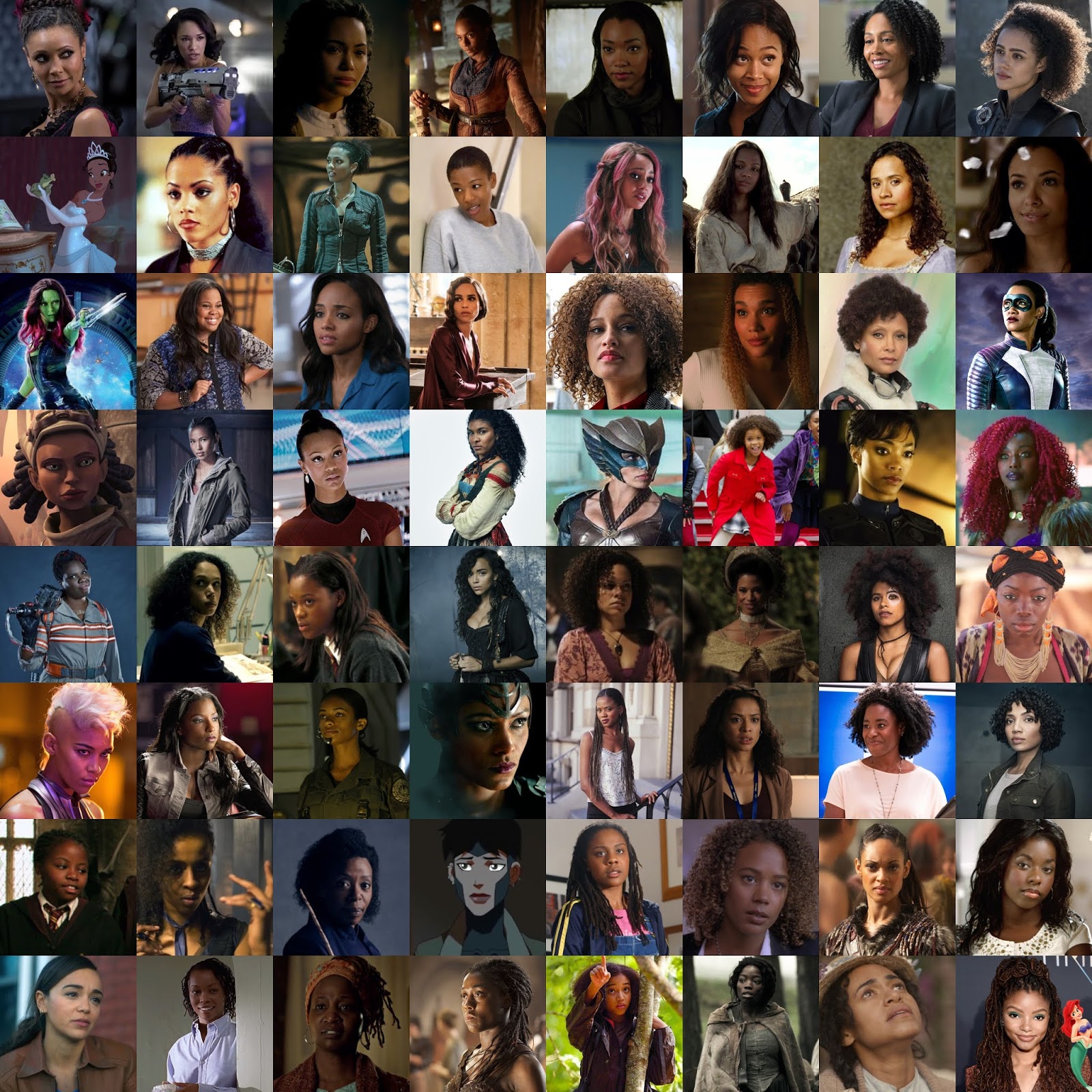
Woman of the Month: All the Black Ladies Who Deserved Better


All the Black Ladies Who Deserved Better
In the wake of the most recent Black Lives Matter resurgence is a variety of stories being shared by Black actresses concerning their treatment on various film and television sets. Whether it’s coming from the fandom or the production crew, the stories have not been pleasant.
Everything from marginalization and harassment, to gaslighting and tokenism, to abuse and flat-out racist vitriol – these actresses and the characters they play have faced it all. I haven’t even watched all of the material depicted in the above image, but I know enough from cultural osmosis that many of the featured characters are forced into black female stereotypes: the Angry Black Woman, the Mammy, the Sexually Voracious Bad Girl (usually juxtaposed with a softer, kinder white woman), the Sassy Sidekick, the Magical Negro – even when the intent is slightly less offensive, archetypes like the Strong Independent Woman Who Don’t Need No Man carry their own tiresome baggage.
I’ve seen with my own eyes the way that fandom values whiteness, and the litany of excuses that arise when explaining why they don’t spend as much time engaging with characters of colour. The reason is often found in the Ouroboros nature of the fan/creator relationship: mandated storytellers don’t bother to develop their black female characters, fandom in turn doesn’t bother to create any original material around them, and so the writers take this as an indication that no one’s interested, further relegating these characters to the side-lines.
That, and – you know – racism. When the reverse is true, and white male characters are as bland as dry toast, fandom will still glomp onto them and put in the hard-yards to provide them with attention, adulation and creative content. With social media being the way it is these days, and the fourth wall becoming ever more tenuous, fans are well-aware that making enough noise on Twitter will see their demands met. And what they inevitably want is more of the status quo.
I had front-row seats to the ghastly treatment of Angel Coulby as Guinevere in Merlin, in which audiences responded with downright indignation that a mixed-race woman could play a character so deeply entrenched in our ideals of kindness, desirability and feminine power, not to mention the ongoing harassment of Candice Patton as Iris West on The Flash. In both cases, fandom’s ire is largely based in the fact that these women are paired up with white men who are (according to them) better suited to other white characters. Funny that.
Nicole Beharie has finally spoken up about her treatment on Sleepy Hollow that led to her decision to quit the show (I remain genuinely stunned that nobody realized Abbie Mills was that show’s drawcard, but then why am I still surprised at the inherent stupidity of racism?) while Amber Riley discusses how Black girls were considered expendable on the set of Glee. Sometimes frustration lies in black actresses being denied any strong narrative arcs of their own (as Vanessa Morgan, who plays Toni Topaz on Riverdalepoints out) or how they’re never fully represented in promotion or at conventions (Rachel True has spoken about how she’s left out of The Craft cast reunions).
Let’s not forget the hideous reaction to Amandla Stenberg being cast as Rue in The Hunger Games (even more infuriating since Rue was described as black in the books) a response which bears no small resemblance to the news that Halle Bailey will take on the role of Ariel in Disney’s live-action remake of The Little Mermaid. Ditto Anna Diop as Starfire in Teen Titans, or Noma Dumezweni as Hermione in The Cursed Child, or Quvenzhanè Wallis as Annie in the 2014 musical of the same name.
And all this is only scratching the surface. Also featured in the collage is the original Lavender Brown (Jennifer Smith), a character who was also played by Kathleen Cauley in Harry Potter, only for both black actresses to be replaced with a white one as soon as Lavender's role was expanded, Nathalie Emmanuel, whose character Missandei was a freed slave that was eventually recaptured and executed in chains, and Jasika Cole, whose role in Fringe required her to play endless support to the white characters, be denied any sort of arc or backstory of her own, and constantly get her name pronounced incorrectly as a joke.

Zoe Saldana manages to feature here three times, as a woman who is murdered by her abusive father to gain a MacGuffin, a communications officer who is constantly undermined by fandom for daring to be in a relationship with a white man, and a pirate girl who disappears without explanation after the first film in the franchise. Pick any of the women in this image, and I'll tell you how they were mistreated by the show or film they featured in.
Black women are underwritten, replaceable, fridged, ridiculed, overly-criticized and held to a higher standard than their white/male counterparts, and even when the writing itself respects them, you can bet that fandom will pick up the slack by insisting they’re Mary Sues, threats to whatever white ships they’re invested in, or that their presence is “just pandering.”  
And so it goes on. It’s exhausting and disheartening to see the same tiresome discourse emerge with each new fandom, as sometimes it feels like the same fans simply migrate from one franchise to the next, ever in search of the same dull dynamics, between the same cookie-cutter characters; a white audience that would rather project themselves onto other white characters than ever attempt to empathize with a black woman that breaks her mold, transcends the stereotypes, or dares to take centre-stage.
There’s not a huge amount you can do except pour love and attention on the characters that fandom shuns, and defend them in the face of their detractors. But I will say this: fellow white ladies, when it comes to representation in genre television and film… huzzah. That glass ceiling has been more or less shattered, with white woman taking on a wide variety of central roles. We’re Slayers and Ghostbusters and Jedi and Superheroes and Disney Princesses.
So please, when black women get the chance to step into the limelight, whether it’s joining Starfleet or gaining superpowers or singing about the world up above or kissing your white fav… don’t be a self-absorbed asshole. Your plate is already loaded. These ladies deserved better, not only from creators, but from fandom as well. 

Tuesday, June 30, 2020

Reading/Watching Log #54

That’s it for another month; I spent most of it watching the news in a spectrum of emotions ranging from hope to grief to fury, which leaves you spent and exhausted and so very weary of the world.
So unfortunately there might be a bit more negativity than usual below the cut, as I’m sure my mindset left me far more critical than I otherwise could have been about a bland Charlie’s Angels film, a flaccid third season of Killing Eve, and an increasingly obnoxious take on Anne of Green Gables in its third and final season.
Still, there was plenty of good stuff too: a time-travelling Cleopatra, the triumphant return of Phryne Fisher, a delve into the life and times of Emily Dickinson, and Harley Quinn driving off into the sunset with the woman she loves. I also went on a bit of a Lois Duncan bender, so that was a fun trip down memory lane.
Oh, and just one more male-centric/directed story managed to sneak past: I had to watch Onward, and was stunned by how good it was in the face of such lacklustre reviews. Seriously, it’s one of the best things Pixar has put out in ages. 

Saturday, June 27, 2020

Links and Updates

So… what a month. It’s not even over yet, so who knows what the final few days of June will have in store, but truly: these are strange times we live in.
That makes it difficult to know what to say about times like these, largely because I’m surrounded by people far more eloquent and informed than myself on issues of such wide-reaching importance, and because this blog is a pop-culture site, where I look forward to new books, films and television shows, and occasionally moan about them when they don’t pan out.
But social issues are always prevalent in the media we consume, and this month’s double-whammy of the Black Lives Matter movement and J.K. Rowling’s unprovoked comments regarding transgender women have led not only to a surge in the spotlighting of black stories (examining not only the treatment of black characters in fictional contexts, but also the treatment of black actors on various film/television sets) and the youngest generation of Harry Potter actors raising their voices in condemnation of transphobia.
Not to put too fine a point on it, but never forget that the twin evils of this world are white supremacy and the patriarchy. Usually they intersect; sometimes you can be a victim of one while benefiting from the other, often it’s easy to underestimate just how insidious they are, but always they are the root cause of the bigotry, injustice and cruelty of this world.
But there’s light; there always is. In the wake of the aforementioned attacks on black lives and transgender people, it’s heart-warming to be reminded that each new generation is kinder, wiser and more open-minded than the one before. And yes, that doesn’t mean than young people can’t be racist, misogynistic or homophobic (god knows, they’re out there) but eventually: time will have its way. Progress can’t be stopped. The world only spins forward…
…as long as we keep on fighting.

Saturday, June 20, 2020

Standing Tall #28

Any kiwi kid knows who Harold the Giraffe is; in fact, it was just the other day that a little girl at the library was telling me about his visit to her school. The mascot of Life Education, Harold travels around the country to teach children about nutrition, education, self-esteem and environmentalism. Quite a big ask for a puppet, but he’s been around since the eighties at least, and clearly still going strong. (I even got a picture of him in last year’s Santa Parade).
Harold, along with The Longest Drink in Town (we’ll get to that in good time) is coincidentally one of two easily-recognizable cultural icons in New Zealand that just happens to be a giraffe, and I suspect that this may have even been the reason why giraffe sculptures were chosen in the first place.
This one, designed by Gemma Rae Dudson, pays tribute to the fact that Harold is technically a hand-puppet by only depicting him from the neck upwards – and the rest is a mural of children enjoying the great outdoors. As such, its location was on the outskirts of the Pioneer Recreation and Sport Centre, which is very much in keeping with Harold’s ideals.


Saturday, June 13, 2020

Xena Warrior Princess: The Deliverer, Gabrielle's Hope and The Debt Part I and II

Season three of Xena Warrior Princess doesn’t waste much time in kicking off the overarching plot – one that will have ramifications for the rest of the show. What’s more, they decide to shake things up a bit by moving away from Greek mythology and into… Zoroastrianism? A couple of names and concepts are borrowed, but there’s a heavy dose of early Judaism in there too, as well as Boudicca and Stonehenge. Ah, this show…

This post includes what is considered one of the best – if not the best – two-parter episode of the entire show, and so for the first time these reviews will cover four episodes instead of the usual three. TV Tropes would call this Growing The Beard, as it’s the first time audiences were asked to watch Xena as a serious drama instead of campy fun, and the quality of writing, acting and cinematography justifies that request. Yeah, I was surprised too.