Search This Blog

Showing posts with label Disney. Show all posts

Tuesday, September 10, 2019

Meta: Why Aladdin and Jasmine are the Best Disney Power Couple

In hindsight it seems sad and strange that I picked Princess Jasmine to be March's Woman of the Month, Disney's first and only Middle Eastern Princess, knowing what happened in Christchurch just a few weeks later.
Aladdin came in for its fair share of criticism when it was first released, from its cartoonish portrayal of a fantasy Arabian city, to the ethnically-coded features of Jafar, to the infamous: "it's barbaric, but hey, it's home" lyric (the original lead-in to this was: “where they cut off your ear if they don’t like your face…”)
A few "praise Allahs" and "salaams" are scattered throughout, and yet the tone is so intrinsically American and its narrative so Western that it can barely be described as a Middle Eastern tale at all. Disney took an aesthetic (or rather, the parts of it that were recognizable to Western audiences: the minarets, the harem girls, the turbans and scimitars – regardless of their authenticity) and wrapped it gauzily around a Disney tale of heroism, romance and believing in yourself.
The critique is out there, and it’s worth reading.
And yet despite the Disneyfication of the original Aladdin story, however much they diluted the culture upon which the film draws its inspiration, it nevertheless contains two likeable, relatable, three-dimensional leads – who happen to be Middle Eastern.
And though that fact may seem like a tiny drop in the ocean of the relentless awfulness in the world right now, this year it's been a balm. I saw the stage show in February for my birthday, re-watched the original animated film with my Disney-deprived friend a couple of weeks ago, and will probably see the live-action version when it's out on DVD later this year. From start to finish, and on so many levels, it's a great story.
So, I'm gonna talk about it some more. Specifically, why I think Aladdin and Jasmine are the best Disney power couple. Because what's the point of having your own blog if you can't go deep down the rabbit hole of your own incredibly specific interests? 

Monday, May 8, 2017

Review: The Princess and the Frog

The Princess and the Frog came with a lot of high expectations and close scrutiny, mostly down to the fact it featured Disney's first African-American princess and that it was a return to the 2D animation that the studio was renowned for (their last had been the awful Home on the Range back in 2004).
The film was also meant to herald the triumphant return of the Disney fairy tale, something spelt out pretty blatantly in its early trailers, which began with clips from Aladdin, Beauty and the Beast, The Little Mermaid and The Lion King.
In many ways, it fulfilled its promises. It was released to positive reviews (sitting at 84% on Rotten Tomatoes) and certainly made a healthy profit – but apparently not as much a profit as Disney would have liked, sealing the fate not only of 2D animation but also the treatment of all fairy tale films to come.

Saturday, October 11, 2014

Meta: Why is Frozen so Popular?


Though it was released nearly a year ago, the Frozen juggernaut is still going strong.

According to this report, people are waiting for hours (literally, hours) to see Anna and Elsa at the Disneyland Parks, whilst Amazon.com is filled with pages of furious one-star reviews on practically all its Frozen merchandise – not because the products are faulty, but because private sellers are offering sold-out stock at exorbitant prices. Feel like paying $80 for an Elsa dress? 


It's a Disney on Ice show (of course), a soon to be Broadway musical, and part of a spin-off crossover on Once Upon a Time, which treats the film as strictly canon as opposed to putting their usual spin on traditional fairy tales.


Both my parents are teachers, and from them I've learned that several kindergartens have extended a casual ban on Frozen, not just because teachers are being driven up the wall by endless renditions of Let It Go, but because there's genuine concern that over-saturation of the film is having an adverse effect on the children's creative output.

Oh, and apparently "Elsa" is now ranked as the 88th most popular baby name in the US. All the Arials that were born and raised in the Eighties are probably looking on with a mixture of sympathy and relief.


That Frozen hit a cultural nerve there can be no doubt. But what exactly was that nerve? Well, I've got some theories.

1. The songs.

Okay, that song. You know the one I'm talking about.


In this trailer for the film, explicit mention is made of the music as a selling point, though personally I think that the soundtrack is just... good. Good but not great, mainly because every song feels as though it belongs to a completely different movie.

But people everywhere are obsessed with Let It Go, which (just to give it the necessary validation) won the Academy Award for Best Original Song. And sure, it's a catchy tune, but there's more going on here than just a power ballad belted out at the top of Idina Menzel's lungs.

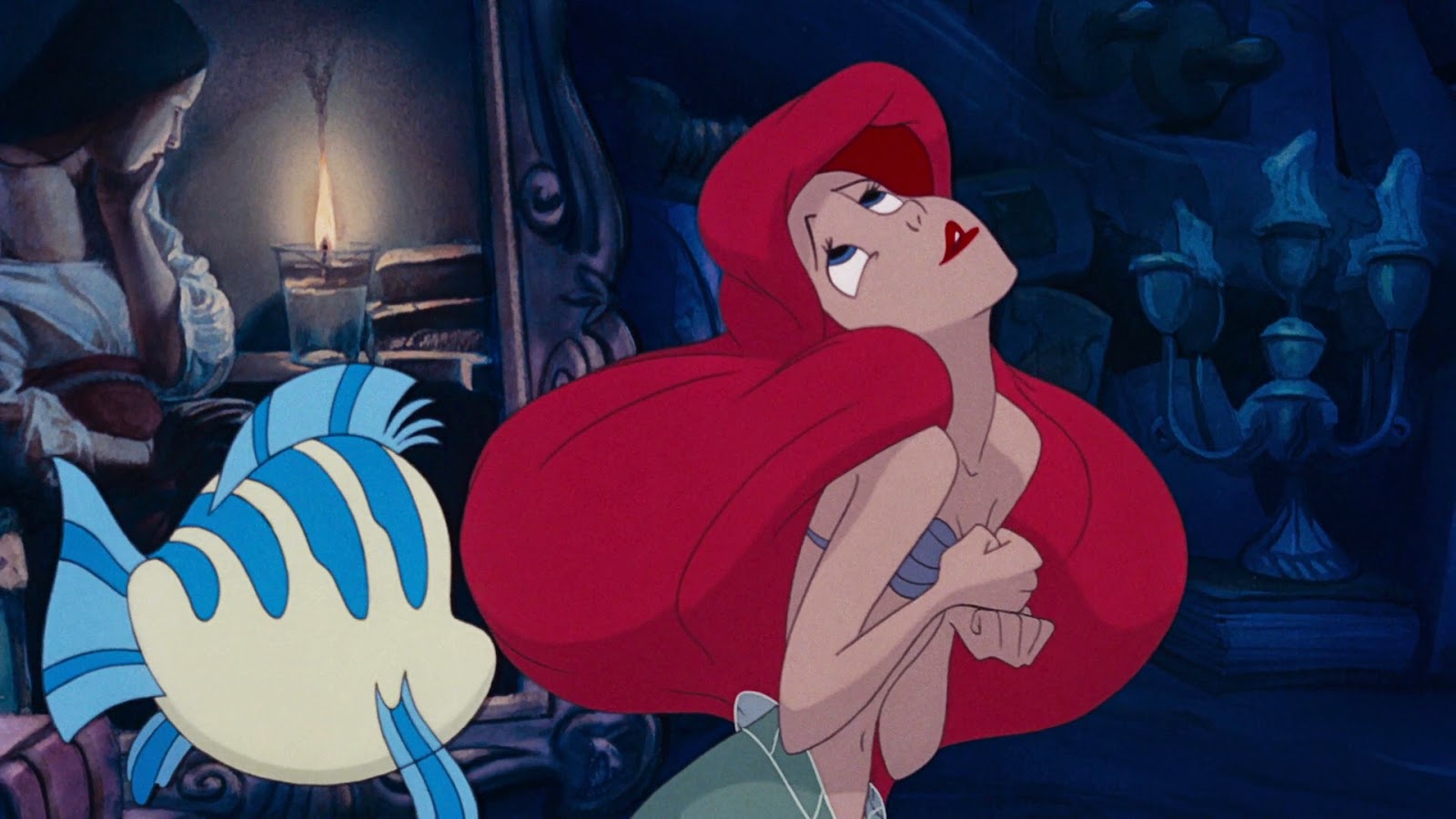
Every Disney Princess has what is called an I Want Song, one in which they sing passionately about what it is they most desire. Arial wanted to be part of that world, Belle wanted adventure in the great wide somewhere, Snow White was waiting for her prince to come. But Let It Go is different.

There's nothing longing or desperate about this song; this is a song about desire that's already been fulfilled. After Elsa flees Arendelle she realizes that she no longer needs to keep her power in check; as such the song moves from sadness and despair to defiance and joy. Directly following the lyrics: "a kingdom of isolation" and "conceal don't feel" comes "no rules for me" and "I'll rise like the break of dawn." And while all this is going on, we have visuals of Elsa testing the extent of her powers for the first time, experimenting with a few blasts of snow and finishing with the construction of a massive ice palace.

No hate for Arial and Belle, but just check out their body language and tell me which one you'd most like to be:

"I wish..."


"I want..."


"I am..."

It's a song that celebrates a girl's empowerment and self-affirmation while simultaneously delivering a giant "fuck you" to the society that's stifled her since childhood. Is it any wonder girls are addicted to it?

Okay, so I'm not saying that six year olds have psychologically cross-examined this song to the same extent I have, but sometimes the mind understands what the brain can't quite grasp. There's a reason why Let It Go is so astoundingly popular, and I'd suggest that it's not just about how it sounds, but what it says - and consequently, what girls are saying when they sing it.

The song is called "Let it go", but "Here I stand" is perhaps its most powerful line.

2. Projection.

I've heard it said that little boys don't fantasise about being Batman – they fantasise about being Robin and helping Batman. It makes sense when you think about it. Batman is a grim and foreboding figure, whereas the Boy Wonder is much more approachable and relatable.

I propose that a similar thing is happening with girls watching Frozen. Everyone projects themselves onto or into stories; often it is the direct intention of storytellers for them to do so. There are thousands of fictional characters that exist for us to vicariously experience emotions and experiences through.


In Frozen it's clear that Anna is our protagonist, the one with whom little girls are meant to relate. She's the cheerful, clumsy, awkward, sweet-natured every-girl. Elsa on the other hand, is more remote. The screen-writers are on record as saying the effect her powers have on her is an analogy to depression, forcing her into anxiety and despair – something you'd hope the average child has not experienced.

Yet for all of that, it's obvious that Elsa is the more popular character of the two. She's what the film is about, and it's all the Elsa merchandise (the dresses, the tiaras, the shoes) that is in highest demand. Her character design is more distinctive than Anna's, and she's got those nifty ice powers to boot.

Trust me, there's plenty more where this came from...

But by having two female protagonists, Frozen can give little girls something no Disney film has ever offered them before: a choice. Relatability and wish-fulfilment. They can relate to the bubbly, down-to-earth Anna, but they can aspire to the poise and elegance of Elsa.

In other words, they are Anna now, but they're going to grow up and be Elsa.

3. Storytelling Expectations and Subversions

Fandom is a hotbed of creativity, enjoyment and fun. It can also be a cesspit of misogyny, racism and hypocrisy. What really gets my goat is the disparity between fandom's insistence that they want stories with more diversity and female characters, only to react with a complete lack of interest when they actually get these things. Just off the top of my head, Fast Girls and Labyrinth (2012) are two – admittedly average – films that are nonetheless packed full of diverse women with interesting dynamics. Look them up on Tumblr, and you'll find that their tags are filled almost exclusively with Bradley James and Sebastian Stan pictures.


And so for Frozen to be a success was heartening; a vindication that sometimes the viewing public actually means what it says. They wanted more emphasis on female dynamics, and on being offered a story that did exactly that, they put their money where their mouths were.


And there's little doubt that at least part of the reason (if not most of the reason) why Frozen is such a success is because it focuses on two female protagonists and their relationship. At the heart of this movie is sisterhood. Nothing else – not the romantic subplot, not the goofy sidekick, and not the low-key villain – is allowed to overshadow that, and the two biggest talking points of the film are undoubtedly a) Anna and Hans's engagement getting shot down by Elsa as being far too hasty, and b) that the act of true love which saves the day is not Kristoff kissing Anna, but Anna sacrificing herself for Elsa.


And though this is not the first time a film has poked fun of Love at First Sight or played around with True Love's Kiss (off the top of my head it was Enchanted that mocked the former and Once Upon a Time that subverted the latter), it is the first time either of those things have been utilized in the Disney Animated Canon, which usually plays both tropes completely straight. Heck, they practically popularized both as legitimate storytelling tools!

***

These elements may not have made Frozen an instant hit, but I do think they're what have contributed to its longevity. This franchise isn't going anywhere in a hurry, and I like to think that (despite my relatively lukewarm attitude to it) the reasons for its popularity are based in a sincere appreciation for its focus on women and its message of empowerment and sisterhood.

Any thoughts?