Search This Blog

Friday, May 8, 2020

Xena Warrior Princess: The Furies, Been There Done That, The Dirty Half-Dozen (+ A Solstice Carol)

So here we are, still in lockdown but heading into the third season of Xena Warrior Princess, which contains what are considered some of the very best episodes the show had to offer. There’s the infamous “Rift” arc between Xena and Gabrielle, more flashbacks into our heroine’s dark past, plenty of juicy material for favourite guest characters Callisto, Ares and Aphrodite, and some scripts that are incredibly good – not just in the context of a cheesy swords-and-sorcery show, but genuinely good in regards to the issues they tackle and the creativity with which they’re shot and performed – including the musical episode. 

There’s good stuff ahead of us!

Friday, May 1, 2020

Woman of the Month: Iris West-Allen


Iris West-Allen from The Flash
I’ve said it before, and I’m saying it again: playing the Love Interest to a superhero is one of the most thankless roles an actress can take.
It usually involves three of the most tedious tropes imaginable: Locked Out of the Loop (a prolonged period of time in which you can’t know his secret identity, even though everyone else does), Distressed Damsel (in which your connection to the hero means you’re constantly rendered a helpless victim) and The Caretaker (any relationship with a vigilante crime-fighter usually revolves around his needs, responsibilities and identity). And there’s always the constant threat of fridging in order to devastate and/or motivate him.
Candice Patton had even more on her plate when she took the role of Iris West, given the inevitable troll remarks over her race (the character has been traditionally depicted as white) and narrative baggage in the form of Iris and Barry being raised together in the same house as children, giving them a quasi-sibling vibe that many viewers used as a mark against the pairing.
Throw in plenty of Romantic False Leads that were usually pretty likeable, and the typical scenes in which Iris becomes frustrated at Barry’s furtive behaviour (even though the audience knew there was heroic reasoning behind it) and I wouldn’t have blamed Patton for casting nervous glances over at Arrow and the complete hatchet job they made of Laurel Lance, her leading lady equivalent.
The deck was stacked against her, and yet in Patton’s hands, Iris rose above it all.
Much of this has to do with her innate charisma, though it took a while for the showrunners to utilize her outside the boundaries of the typical unattainable love interest. They focused on her role as a daughter, sister and girlfriend, and dabbled a little with her interest in freelance journalism, though it wasn’t until season four that they settled her into the role of team leader at Star Labs: guiding Barry through his heroics via an earpiece, issuing orders to the rest of the team, and offering emotional or moral support wherever needed.
From this point forward, her stories improve exponentially, from a short stint as a speedster after gaining Barry’s powers (with very cool purple lightning) to re-establishing her newspaper and hiring staff, to meeting her time-travelling daughter from the future and grappling with her new role as a mother. She even had fun playing Millie Floss in an alternate-world, magic-infused crossover episode. Throughout it all she retains her integrity, her optimism, and her great love for her family. I don’t think she gets nearly enough credit as The Heart of this show, and it wouldn’t be the same without her.
There are many variations of Iris West out there, but Candice Patton has set a new precedent for how she’s portrayed, leading to the casting of another black actress (Kiersey Clemons) in the DC Cinematic Universe – whose scenes were cut from Justice League. Of course they were. But I’m hearing good things about Iris’s continuing role in the sixth season of The Flash, so hopefully she’ll continue to make her mark on the ever-expanding franchise…

Thursday, April 30, 2020

Reading/Watching Log #52

Well, if this lockdown has been good for anything (besides preventing the spread of a deadly disease) it’s in giving us plenty of time to binge-watch whatever we like and catch up on our extensive to-be-read lists. I hope everyone is managing well; here in New Zealand we’ve recently moved into Level 3, which means that fast foods places are back open, but other non-essential facilities (including libraries) are still closed.
Though I’ve largely stuck with my New Years’ Resolution of female-centric stories and creators, I loosened up a bit for the sake of stress-free viewing and just watched whatever I felt like in the moment. I’ll get back to my more rigorous screening process once this drama has wound down, but don’t be surprised if a few male-led films or shows are featured here.
I also managed to watch all the various takes on Emma (which I discuss in the post directly below this one) and the first two seasons of Killing Eve in preparation for season three. So glad that show is back!
I hope everyone's keeping safe out there.

Saturday, April 25, 2020

Review: Emma (yes, all of them)

Over the last four weeks I’ve discovered the perfect combination of comforts for surviving lockdown: chocolate and Jane Austen – specifically Emma, her fourth published work and arguably her best novel. 
Yet even with nothing else to do, I didn’t have the time or energy to reread the book itself, so I made do with all five adaptations of the story, from the BBC’s miniseries in 1972, the Gwyneth Paltrow vehicle in 1996, the second BBC adaption to come out that same year, their third televised attempt in 2009, and Autumn de Wilde’s interpretation of early 2020.
The story certainly knows how to time itself, averaging one (nearly) every decade, at (rough) ten year intervals.
I’ve often believed that the reason Emma and Pride and Prejudice are over-represented in media is due to the fact Elizabeth and Emma are spirited in a way the ladies of Mansfield Park and Persuasion aren’t. Austen was saying something very different about social expectations and personal fortitude in her treatment of Anne Elliot and Fanny Price, which has inevitably led to screenwriters finding them “less fun”... but perhaps not entirely without reason. 
Elizabeth and Emma are more dynamic characters; they are different women at the end of their stories than they were at the beginning. It’s perhaps due to the internal change required of its main character that Emma is generally considered Austen’s finest work (even if Pride and Prejudice remains her most beloved) with a protagonist that is deeply flawed yet all the more lovable for it. 
According to Austen herself: "I am going to take a heroine whom no one but myself will much like", and yet we do like Emma – not in spite of her faults, but because of them. Her snobbery, her meddling, her foolishness – it’s all so entertaining that it’s almost disappointing when she grows out of it.
Austen also deserves credit for taking the familiar beats of a romance novel and turning them inside out. In any other story it’s beautiful, impoverished and musically gifted Jane Fairfax who would be our protagonist, with Frank as the dashing, unpredictable love interest who promises to save her from a life of destitution if only she can endure the secrecy that’s required to survive his formidable aunt.
Emma stands in ignorance of the drama happening right under her nose, never doubting that she’s the main character but not realizing the point of her arc is to realize how wrong she is about everything, and that her true love isn’t the charming, enigmatic Frank but George Knightley: old family friend, next door neighbour and technical brother-in-law. 
All of Emma’s matchmaking attempts end in disaster, she completely misinterprets Mr Elton and Frank Churchill, and is completely wrong about everything. She’s… dare I say… clueless?
Emma Woodhouse is also unique for being the only one of Austen’s heroines who is under no familial, financial or even societal pressure to marry. She has no need to worry about her well-being or that of her family, and her father's desire to keep her close only increases her power. She can do whatever she likes, and so when she does eventually wed, it’s entirely because she wants to. 
It gives the book a lightness of spirit that’s missing from her other works, in which Elizabeth, Anne, Elinor and Marianne have to  actually worry about their futures and financial situations, and I suspect that’s another part of the reason why Emma has been adapted so often. So many readers – rightly or wrongly – look upon Austen as escapism, and as such Emma’s complete lack of poverty or long-term worry becomes the most appealing aspect of her story.

Monday, April 13, 2020

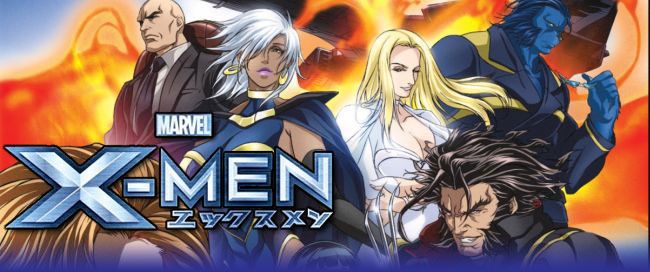
Review: Marvel Anime: X-Men

Before starting my rewatch of the animated X-Men adaptations, I had no idea this anime even existed. According to Wikipedia, the show was one of six animated collaborations between Marvel Entertainment and Madhouse studios (four series and two films in total). Airing between 2010 and 2012 in Japan and North America, the project also included Iron Man and Blade, as well as a solo Wolverine outing – which I'll get to next.

I've no idea how familiar the creators were with its direct predecessor Wolverine and the X-Men, but coincidentally or not, X-Men Anime also begins with the apparent death of Jean Grey and revolves around a mystery involving the trustworthiness of Emma Frost. It's also something of an inversion of X-Men Evolution, for whereas that show ended with a brief glimpse of Jean turning into the Phoenix, this one starts with it.  
In a short flashback, Phoenix-possessed Jean self-destructs in front of her teammates as a desperate last resort, leaving Cyclops devastated and the X-Men disbanded. It's a strong opening, and one that really captures the destruction and chaos the Phoenix wrought in a way no other adaptation has – but as it turns out, this series has virtually nothing to do with The Phoenix Saga. All that matters is that Jean is dead and Cyclops is heartbroken, and believe it or not, she doesn't return to life by the final episode.
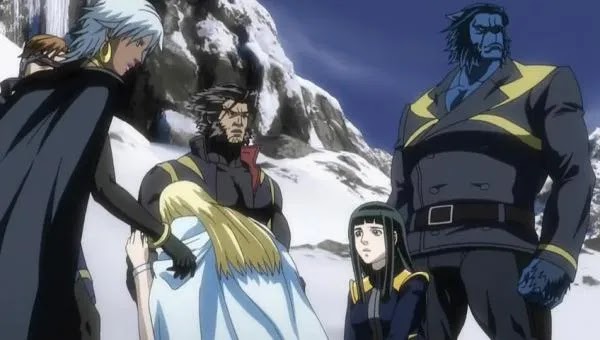
The plot starts properly when the core members of the X-Men – Cyclops, Storm, Beast and Wolverine – are contacted by Professor X and asked to return to the mansion. He has a new mission for them, one that involves a trip to an isolated area of Japan that he finds impossible to scan with Cerebro. Something is blocking his efforts, and on arriving in the Tohoku region it becomes clear that something is very wrong: not only are there deformed fish in the streams and dead trees on the riverbank, but twenty young mutant children have gone missing.


Naturally, mutants are copping the blame for the trouble (and local police aren’t pursing the case for this precise reason), though the team is surprised to find such a large percentage of mutants amidst what is such a small population – especially since Cerebro is unable to penetrate the area. And so the investigation begins...
There are twelve episodes in all, each only about twenty minutes long, so things whizz by pretty quickly, with all the staples of anime that you’ve come to expect: gravity-defying boobs for the women, a tendency for men to get their shirts shredded to reveal six-pack abs, prolonged montages of reaction shots from characters (usually punctuated with gasps or grunts), and lots of uncomfortable butt poses.

Wednesday, April 8, 2020

Faerie Tale Theatre: Little Red Riding Hood

Looking back over my blog, I can see that I haven’t done one of these in two years. But if this pandemic is good for anything, it’s in forcing me to finish what I started… back in 2016.
For those not in the know, Faerie Tale Theatre was a pet project of Shelley Duvall that aired back in the eighties, covering most of the traditional tales in a sincere attempt to bring them to a young audience. I missed these while I was growing up, but they certainly feel like something I would have enjoyed at the time, and in to revisit as an adult for all that eighties kitsch.
The premise was that each fifty-minute episode would dramatize a familiar fairy tale (usually with some modern comedy and plenty of filler to plump up the run-time) within the scope of an actual theatre. The sets and props are very stagey, and the actors perform has though they’re in a pantomime theatre, with a live audience watching.
A lot of the stories are pretty hit-or-miss, with a general goofiness that offsets the surprising level of talents that Shelley Duvall managed to rope into this production, but I’d say it all holds up pretty well.

Though this instalment, Little Red Riding Hood, poses a challenge. How do you convert a story that can be rattled off to a child in under two minutes into an hour-long episode? Well, you throw in a love story between the main character (now called Mary) and her father’s apprentice, give plenty of screen-time to the wolf talking to himself (he’s been kicked out of his pack because he killed a boy – the one who cried wolf?) and construct a shaky character-arc in which Mary’s wish to be treated like an adult is tied to her parents’ overprotectiveness – though this peters out as it becomes more about her love interest proving himself to her father.
That’s a lot of padding for a pretty simple story about stranger danger, but it’s not the first time I’ve seen it done: I grew up with the Cannon Movie Tales, whose take on this story involves Red Riding Hood’s father’s evil twin taking over his brother’s position in the community while he’s away at some unspecified war, and terrorizes the people with his werewolf-for-hire. Yeah, suffice to say that adaptations struggle with this story… 

Monday, April 6, 2020

Review: Doctor Who: Season 12

For Jodi Whittaker’s maiden voyage as the Doctor’s thirteenth incarnation I reviewed each episode of season eleven, only to find that this time around I simply didn’t have time for that kind of commitment. But I certainly want to keep appreciating the work she’s doing (I’m the proud owner of a Thirteenth Doctor Rock Candy figurine) and so am continuing my ten-point template for Doctor Who related reviews – though in this case, it’s for the entire season and not per episode.

So, here are ten observations about season twelve of Doctor Who…